

Green Is The New Gold: Inside Saudi Arabia’s Eco-Renaissance
The story of Saudi Arabia is inextricably linked to its greatest natural resource: oil. Since the 1930s, vast reserves of this ‘black gold’ have reshaped both the domestic and global economy, catapulting the Kingdom onto the world stage. Today, a new kind of transformation is underway – one that places ecological sensitivity and sustainability at the centre of national ambition. From solar-powered cities and regenerative tourism to desert architecture rooted in ecology, Saudi today is actively reshaping its identity through a more environmental lens, backed by Vision 2030.
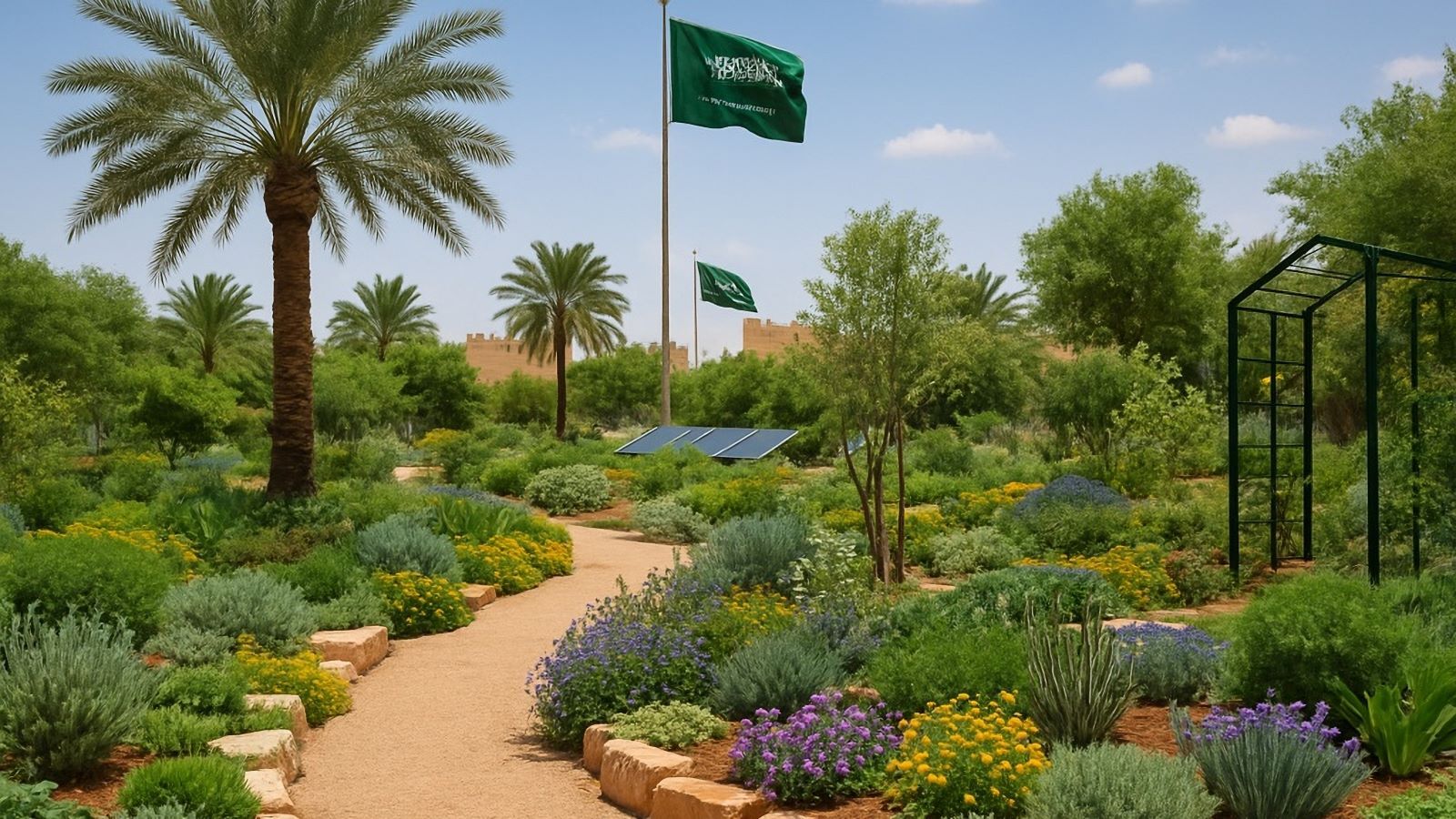
Vision 2030: Sustainability as Strategy, Not Slogan
Launched in 2016, Vision 2030 is Saudi Arabia’s national transformation plan – a roadmap designed to reduce reliance on oil, stimulate private sector growth, and cultivate a knowledge-based economy. Central to the plan are sweeping sustainability commitments, including:
- Generating 50% of the country’s energy from renewable sources by 2030
- Planting 10 billion trees across the Kingdom under the Saudi Green Initiative
- Designating more than 30% of Saudi’s land and sea as protected natural areas
- Establishing carbon-neutral tourism zones, including The Red Sea and AMAALA
- Investing in clean hydrogen production and carbon capture technologies
Many of these initiatives have already moved from vision to execution. The Sakaka solar plant is already operational, powering homes with zero emissions, and the Dumat Al Jandal wind farm is now online, providing over 400 megawatts of clean energy. Across giga-projects like NEOM and The Red Sea, new construction codes mandate the use of low-impact materials, off-grid power solutions, and zero-waste policies.
What’s emerging is something of a paradox: the Kingdom’s oil wealth is now funding its environmental reinvention – a strategic use of surplus to build a more sustainable future.
Sustainability in Practice: Flagships of New Saudi Arabia
The Red Sea: Regenerative Tourism at Scale
One of the most spectacular and ecologically captivating developments taking shape in Saudi Arabia today is the Red Sea – a largely untouched cluster of more than 90 white-sand islands and islets. Historically closed to travellers, this region is now blazing the trail for regenerative development: a pioneering approach that seeks not only to preserve the environment, but to restore and enhance it. At the forefront here are The Red Sea, both led by Red Sea Global.
Prior to construction, the region’s marine and coastal ecosystems were surveyed in depth, including coral reefs, seagrass beds, mangrove forests, and key wildlife habitats such as turtle nesting beaches and migratory bird zones. These studies informed a development framework with strict environmental limits – just 22 of the 90 islands will be developed. These ecosystems are still monitored in real time using AI-enabled platforms that track reef health, water quality, and habitat shifts across land and sea.
Architecture in the Red Sea reflects both climate and context. Locally inspired materials – sand-toned stone, light wood, woven screens – blend with the natural landscape and support passive cooling. Similarly, residences in the nearby Four Seasons Resort and Residences feature deep-set façades, low-carbon concrete, and extensive overhangs designed to limit solar heat gain. Across all destinations in The Red Sea, renewable energy powers every aspect of daily operations, from desalination to transport.
Beyond the built environment, marine protected areas have been declared across vast sections of coastline, preserving fragile habitats above and below the surface. Some resorts, such as Nujuma, a Ritz-Carlton Reserve, even have resident naturalists and astronomers on staff, placing the natural world at the heart of the guest experience.
Diriyah: Heritage as a Framework for Sustainability
On the northwestern edge of Riyadh lies Diriyah, the birthplace of the First Saudi State and one of the Kingdom’s most culturally charged redevelopment projects. Diriyah is rooted in a different kind of sustainability – one that draws from the vernacular of traditional Najdi design. In this postcard-perfect Saudi city, earthen mudbrick facades are used to naturally regulate heat, placed along carefully planned narrow streets that limit sun exposure – all age-old strategies that respond intuitively to desert conditions.
New luxury residences carry these Najdi principles forward with intention. Villas and apartment blocks are arranged around shaded corridors planted with ghaf trees, tamarisk, and desert grass – hardy species selected for their low water demand. It’s no surprise that Diriyah has earned both LEED Platinum and Mostadam (Ajwad) certifications – a rare double honour that reflects just how deeply sustainability is considered in the revival of this historic district.
Final Thoughts: A Lasting Shift in Perspective
With the pace at which Saudi Arabia is growing, it’s easy to forget the landscape it’s growing in: hot, vast, and largely rainless for most of the year. Historically, this land has been sustained only by small, resourceful Bedouin communities who moved with the seasons and understood the land’s limits intimately. In that context, the Kingdom’s embrace of regenerative development – wind farms, biophilic gardens, marine zoning – is nothing short of triumphant. It’s proof that meaningful change, when pursued with clarity, is entirely possible.
Read More