

Diriyah Contemporary Art Biennale 2026
Saudi Arabia’s artistic landscape has begun to shift in recent years. New museums, cultural districts and creative initiatives are emerging across the Kingdom, signalling a period in which contemporary art is gaining both visibility and confidence. Within this evolving environment, the historic city of Diriyah has become one of the most important meeting points for artists, curators and audiences interested in the region’s creative future.
From 30 January to 2 May 2026, Diriyah hosts the third edition of the Diriyah Contemporary Art Biennale, an exhibition that has established a reputation as one of the Kingdom’s most significant platforms for contemporary artistic practice. Bringing together artists from across the Middle East and the wider international art world, the Biennale unfolds through installations, performances and newly commissioned projects that explore the many ways artistic ideas travel, evolve and intersect.
In only a few editions, the Diriyah Contemporary Art Biennale has become something of a red-letter event in the region’s art calendar. As Saudi Arabia continues to expand its creative infrastructure, the Biennale reflects the country’s growing engagement with global contemporary art while remaining deeply rooted in the histories, landscapes and cultural traditions that shape Saudi Arabia’s identity.
The Third Edition: A Theme with Lasting Resonance
This year’s edition unfolds under the theme “In Interludes and Transitions”, a title inspired by long traditions of movement and the cycles of journeys and encampments that have shaped the lives of many communities, particularly the Bedouin societies of the region.
The choice is far from symbolic decoration. Instead, it provides the conceptual backbone of the exhibition, inviting visitors to ponder ideas of memory, landscape and societal transformation. In its Saudi’s version, the Art Biennale explores how people, ideas and artistic expressions move across time and geography, linking regional histories with the wider world of contemporary art.
The Biennale extends far beyond the format of a traditional exhibition. It becomes a space where artworks tell layered stories tracing connections between past and present while imagining possible futures. Many of the installations combine historical references with elements of imagination, offering reflections on human experience in its many forms.
A Setting Shaped by History
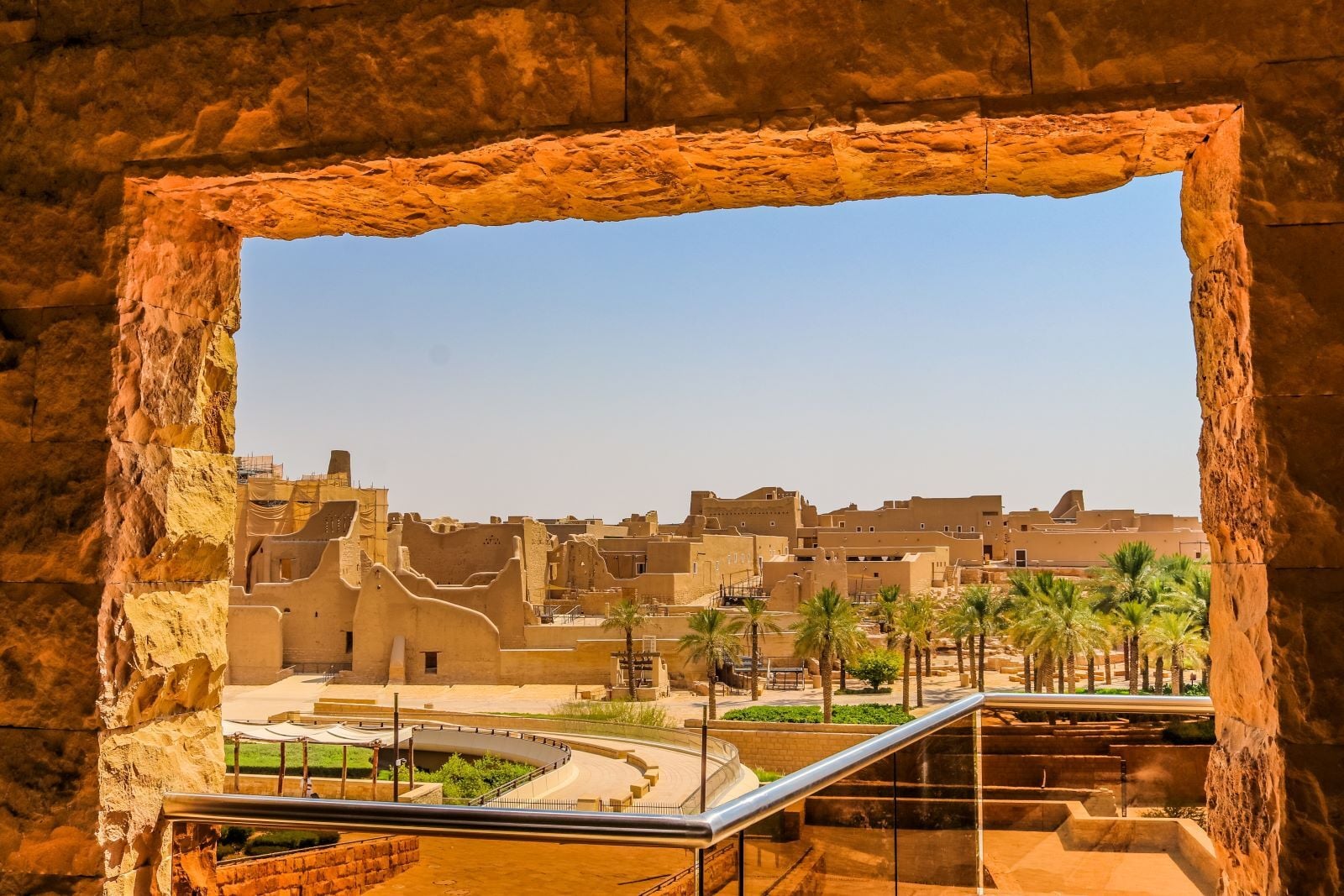
The Biennale unfolds within JAX District, Diriyah’s emerging creative quarter, located near the UNESCO World Heritage Site of At-Turaif. Here, the setting becomes an integral part of the experience, creating a compelling dialogue between heritage and contemporary artistic expression.
Industrial galleries and open courtyards set the stage for installations that respond to the surrounding architecture and landscape. From the moment visitors arrive, the sense of movement that shapes the exhibition becomes apparent. Rather than a sequence of static displays, the Biennale unfolds gradually, encouraging visitors to wander through rooms, courtyards and performance spaces where artworks reveal themselves along the way.
As visitors wander through the district, installations, performances and visual pieces appear in succession, encouraging exploration and discovery at every turn. The experience feels less like a conventional gallery visit and more like a journey through an evolving artistic landscape.
Artists and Notable Contributions
The third edition brings together more than 65 artists from 37 countries, presenting over 20 newly commissioned works created specifically for the Biennale.
Bringing together artists from across the world, the Biennale becomes a meeting point between the Middle East and the wider contemporary art scene. The exhibition reveals how artists from different regions respond to shared questions of identity, memory and transformation.
The exhibition spans a wide range of disciplines, from photography and sculpture to performance, video, music and sound art. Across these mediums, artists draw on traditional references while experimenting with new techniques, creating pieces that remain rooted in local heritage while engaging with the wider international art scene.
Themes Explored Across the Exhibition
Several key ideas run through the exhibition, shaping its curatorial direction and the works presented throughout the Biennale.
Hybrid Artistic Forms
Many works bring together visual art, sound, music and performance, creating immersive experiences that move beyond the boundaries of traditional media. Through these cross-disciplinary approaches, artists explore new ways of presenting and experiencing contemporary art.
Movement and Transformation
Across many installations, a sense of motion appears as a recurring thread. Whether expressed through migration, travel or symbolic transitions, these works reflect the shifting social and historical landscapes that shape contemporary life.
Local Identity Within a Global Dialogue
While deeply rooted in the cultural context of the region, many works engage with themes that resonate far beyond it. Together, they highlight how artists draw on local histories and traditions while participating in wider global conversations within contemporary art.
Together, these themes give the exhibition both depth and texture, inviting visitors to take part in the experience rather than stand apart from it.
An Opening that Set the Scene
The Biennale opened with a procession moving through JAX District. Drummers led the way alongside performance artists, guiding visitors between the district’s galleries and courtyards as the evening unfolded.
Music and live performances followed, blending traditional and contemporary influences. The atmosphere shifted easily between stage and audience. Sound travelled across the courtyards, movement carried through the galleries, and visual works anchored the experience.
That same spirit appears throughout the exhibition. Many installations are conceived as immersive environments, encouraging visitors to drift between spaces and engage directly with the artworks.
Cultural Significance
The Diriyah Contemporary Art Biennale has quickly become one of the region’s most notable cultural events. Since its first editions, it has begun to draw artists, curators and visitors from across the Middle East and beyond, placing Saudi Arabia more firmly within the international art world.
The event reflects a wider shift taking place across the Kingdom. New cultural institutions are emerging, artists are finding new platforms, and audiences are becoming part of a growing creative conversation. The Biennale sits at the centre of that change.
It also contributes to Diriyah’s rise as a cultural destination. Visitors arrive for the exhibition but remain for the setting itself, where heritage, contemporary creativity and economic ambition increasingly move together.
Highlights and Accompanying Events
Among the highlights of the third edition are pieces by Saudi and international artists who reinterpret traditional visual references through contemporary mediums, including video art and large-scale interactive installations. Throughout the exhibition, familiar cultural motifs appear reimagined through new materials and formats, revealing how artists reshape inherited visual traditions.
Several installations weave together sound, movement and spatial design to create immersive environments that unfold gradually as visitors traverse the galleries. Instead of standing apart from the art, audiences are invited to experience the exhibition physically as they drift through its spaces.
Beyond the main exhibition programme, the Biennale also hosts workshops, talks and artist discussions, offering audiences a unique window into the Kingdom’s creative evolution and the processes behind the artworks on display.
The Future of The Diriyah Biennale
As the Diriyah Contemporary Art Biennale continues to evolve, its ambitions are becoming clearer. The exhibition brings international artists to a historic setting while remaining closely tied to the identity of Diriyah itself.
The 2026 edition reflects a wider transformation taking place across Saudi Arabia, where contemporary art is gaining new platforms and audiences.
More than a conventional exhibition, the Biennale offers a cultural encounter shaped by place, history and artistic experimentation. Visitors arrive for the artworks, but they also experience a landscape where heritage and contemporary creativity now exist side by side.