

7 Michelin-Approved Restaurants to Try in Saudi Arabia – 2026
Good food enjoyed in good company has always been at the heart of Saudi culture. From sprawling majlis dinners to morning coffee rituals, hospitality here is both tradition and art form. In recent years, that deep-rooted food culture has taken centre stage globally, with the Michelin Guide making its long-anticipated Saudi debut in 2023 – and expanding steadily ever since. What makes the Kingdom’s dining scene especially compelling is its balance: homegrown kitchens sit alongside global heavyweights, and fine dining doesn't come at the expense of heritage. Below, we explore a curated list of Michelin-recognised restaurants across Riyadh, Jeddah and AlUla, from reimagined kabsa to omakase counters and chef’s tables worth planning a trip around.
Tofareya, Al Ula
Widely described as the sister site to Petra, Al Ula is one of the Kingdom’s most cinematic landscapes – all weathered sandstone, palm-filled valleys, and traces of ancient civilisations. Among the best places to experience traditional Saudi fare here is Tofareya, a relaxed, open-air eatery in the heart of the Old Town, recently awarded a Bib Gourmand by the Michelin Guide. The menu celebrates time-honoured dishes with regional flair: kabsa made with oranges from AlUla’s famed citrus groves, grilled meats, and sweet Umm Ali for dessert. The setting is as memorable as the meal, with courtyard tables nestled at the foot of the rocky fort and rooftop seating that looks out across the valley. Tofareya is also a local favourite in Jeddah, where the menu leans more heavily into the bolder, smokier flavours of the south.
Samia’s Dish, Jeddah
Samia’s Dish is where traditional Saudi cooking meets contemporary calm. Helmed by female Head Chef Hind Y. Albahkali, this Bib Gourmand-awarded restaurant celebrates the heart of Hijazi cuisine, with standout dishes like the signature ‘meat brik’ – a wholesome, golden pie finished with a drizzle of honey. The majlis here carries a Parisian sensibility, filled with natural light and softened by climbing bougainvillaea and potted palms. True to tradition, coffee is at the heart of the experience. “The first thing we serve our guests is Saudi coffee,” Chef Hind told the Michelin Guide. “It symbolises who we are as Saudis; there’s no home that welcomes guests without it.” Set along the busy retail stretch of Ahmad Al-Attas Street, Samia’s Dish is as well-suited to a mid-shopping pause as it is to a more intentional dinner.
The Rubi Room at Hōchō, Riyadh
If you’ve had your fill of kabsa, slow-cooked lamb, and Umm Ali, there’s Hōchō. Set inside VIA Riyadh, this Japanese-inspired eatery blends omakase-style intimacy with Saudi-rooted ambition. The space is sleek and cosmopolitan, with counter seating and a front-row view of the chefs at work. Recommended in the Michelin Guide, Hōchō revolves around one exceptional ingredient: halal-certified Kobe beef. The menu is a masterclass in simplicity done well: grilled cuts, sushi, and clever riffs on classics like tomato carpaccio and beef tartare. The concept comes from Saudi chef Hassan Fetyani, who trained in Japan before launching the restaurant in late 2024. While the Kobe steak is the headliner, dessert deserves equal attention – the date and walnut tart is a familiar nod to home, best enjoyed with cardamom coffee.
Rasoi by Vineet, Jeddah
Few chefs have done more to modernise Indian fine dining than Vineet Bhatia – the first Indian chef to earn a Michelin star and a pioneer of progressive Indian cuisine. In Jeddah, his signature style comes to life at Rasoi, an elevated dining experience housed within the Mövenpick Hotel Tahlia. The mood is vibrant and celebratory, with jewel-toned interiors, gilded details, and plates that are every bit as expressive. Dishes play confidently between heritage and innovation: Malai lobster, tandoori prawns, and lamb biryani reimagined with finesse. Even familiar curries arrive transformed, rich with saffron, coconut, or charcoal smoke. For a night out that’s bold, colourful, and full of personality, Rasoi is one of Jeddah’s most compelling tables – and Michelin agrees.
Najd Village, Riyadh
Described in the Michelin Guide as “the” place in Riyadh for authentic Saudi cuisine, Najd Village is one of the most charming and nostalgic in the city. Housed in a traditional mudbrick building, the restaurant recreates the feel of an old Najdi home, with wooden beams, patterned floor cushions, and antique lanterns casting a warm glow across low tables. The menu covers the full spectrum of central Saudi favourites, from smoky hashi (camel meat) to jareesh, qursan, and bubbling lamb stews served in clay pots. Generous portions and floor seating make this a wholesome, communal experience – the kind that leaves a lasting impression on out-of-town guests. You’ll find Najd Village on Al-Takhassusi Street, right in the heart of the city.
Julien by Daniel Boulud, Riyadh
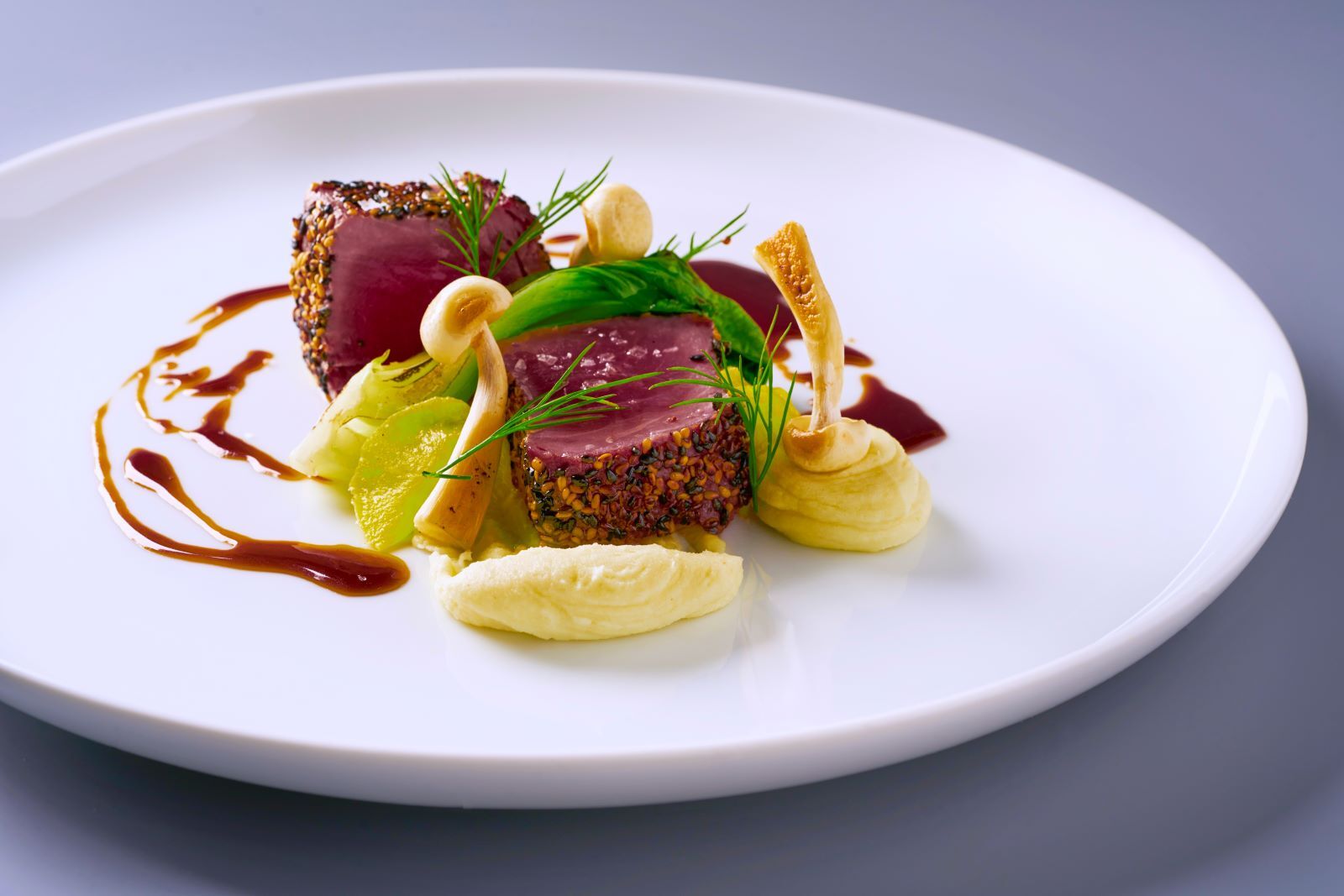
Daniel Boulud is one of those rare chefs who balances global recognition with genuine culinary pedigree. His two-Michelin-starred New York restaurant, Daniel, has drawn a loyal following since the early ’90s, paving the way for a series of acclaimed ventures in Singapore, Dubai, and beyond. In Riyadh, his presence arrives in the form of Julien – a discreet, 12-seat chef’s counter hidden within Café Boulud at the Four Seasons Hotel in Kingdom Tower. Named after Boulud’s father and son, Julien offers a 10-course tasting menu that reinterprets modern French cuisine through a Saudi lens. Expect precise plating, layered textures, and unexpected flavour pairings, all prepared in front of you in an open kitchen that feels more atelier than restaurant. Pairings come in the form of non-alcoholic wines and playful mocktails, served by a notably friendly team.
OVUN Bistro, Riyadh
In the lively Al Sulimaniyah district, OVUN honours the flavours of the wider Arab world with a spectacular Lebanese menu. The space is warm and unpretentious – all natural wood and leafy greens, with a roaring oven at its heart. Dishes are traditional but well-executed: golden fatayer, crunchy fattoush laced with zesty local sumac, and sumptuous garlic shish barak. As the name suggests, the real highlight is the bread, served piping hot from the oven and made to dip, tear, and share. Be sure to arrive here with an appetite: alongside praising the muhammara and mouhalabiya milk pudding, the Michelin critic noted the portions are well-priced, generous, and perfect for sharing.
Read More