

The Marine Wealth in The Red Sea
The Red Sea is one of the world’s most extraordinary marine ecosystems — a natural wonder abounding with astonishing biodiversity and immeasurable ecological wealth. Positioned between two great continents, Africa and Asia, and fringed by vast stretches of desert, the Red Sea offers a rare contrast: a harsh climate above water and an environment teeming with life beneath it. This distinctive body of water is home to countless aquatic species that exist nowhere else on Earth, making it an area of study for scientists and a sanctuary for nature enthusiasts from across the globe.
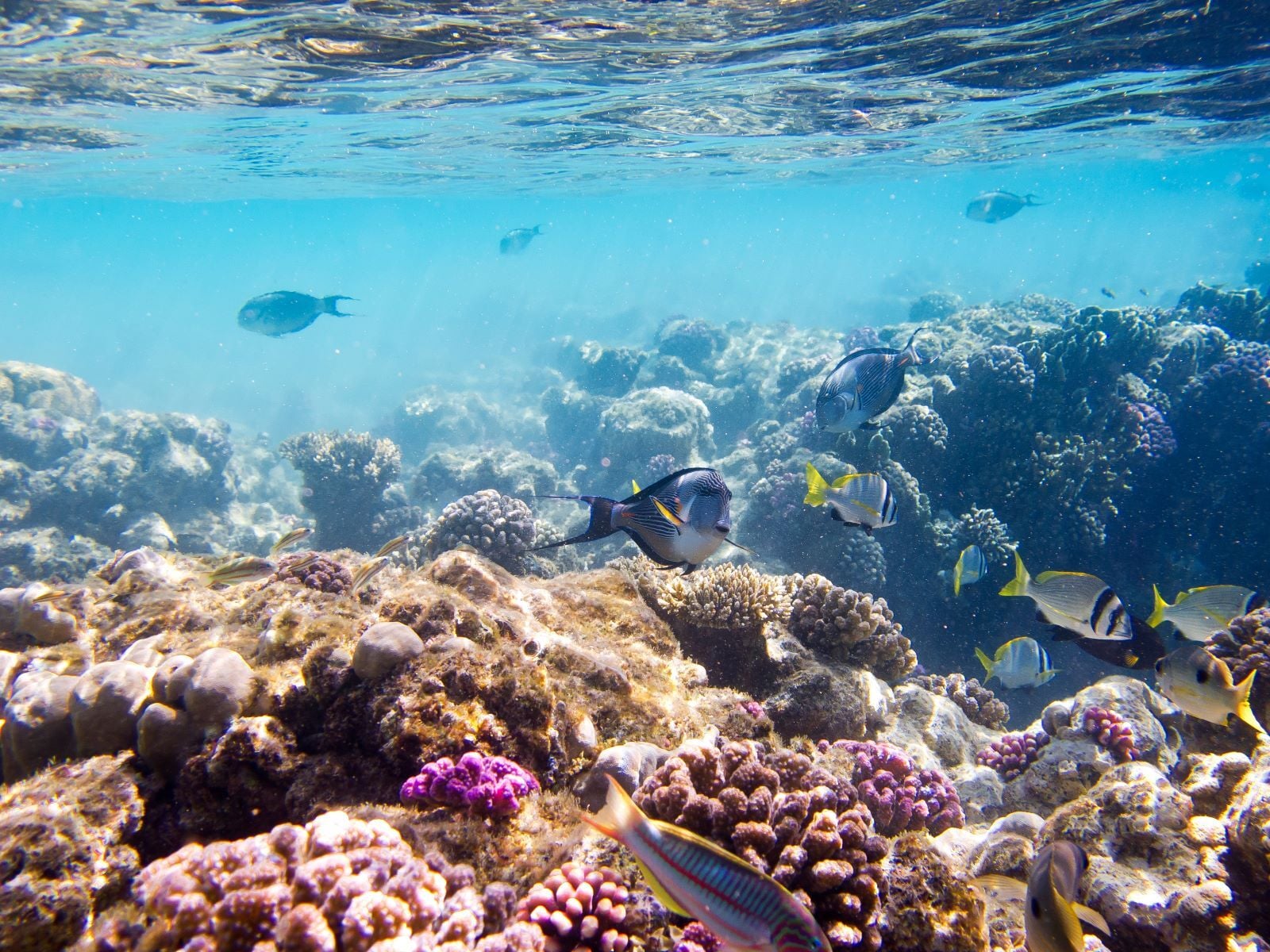
Biodiversity in the Red Sea
The Red Sea is celebrated for its exceptional biodiversity, hosting hundreds of species across the marine kingdom. Scientists estimate that its waters harbour 29 species of sharks, 17 species of whales and dolphins, 5 species of sea turtles, more than 1,000 species of fish and 359 species of hard corals — alongside a staggering number of invertebrates. Collectively, this wealth of life transforms the Red Sea into a living natural museum, where divers and swimmers can explore an underwater world of treasures.
These species are not just remarkable in themselves; they also play a vital role in maintaining ecological balance. Microscopic organisms here generate a significant portion of the oxygen we breathe. Coral reefs and mangrove forests serve as natural habitats, offering protection for marine life while safeguarding coastlines against storms and erosion.
Geography and Origins of the Red Sea
Geographically, the Red Sea forms a natural divide between Africa and Asia, linked to the Mediterranean through the Suez Canal and to the Indian Ocean via the Bab el-Mandeb Strait. It was created some 30 million years ago, when tectonic shifts separated the Arabian Peninsula from Africa. This separation, along with the change in sea level during the ice ages, contributed to creating an isolated marine environment characterised by high salinity and warm waters throughout the year.
Unlike many seas, the Red Sea is not fed by rivers, which further heightens its salinity. Coupled with its hot, arid climate, these conditions have compelled its marine species to evolve with exceptional resilience, creating lifeforms exclusive to this sea.
Coral Reefs: Cities of the Sea
The coral reefs of the Red Sea are considered one of the most diverse and vibrant ecosystems on the planet. Stretching along nearly 2,000 kilometres of coastline, they provide a habitat for countless marine species. Built from colonies of tiny organisms known as polyps — tiny organisms belonging to the class of cnidarians, coral reefs are distinguished by their morphological and colour diversity. Among the most iconic is the "brain coral," so named for its resemblance to the human brain.
Far more than a visual spectacle, these reefs form a fully interdependent ecosystem. Echinoderms such as sea stars and sea urchins help keep algae in check, ensuring light reaches the coral. Crustaceans, from shrimp to giant clams, contribute to the overall health of this underwater community. In essence, every organism plays a part in sustaining the reef’s vitality.
Mangroves and Seagrass: Guardians of the Coast
Along the Red Sea’s shores grow mangrove forests — hardy trees and shrubs uniquely adapted to salty waters. These trees have specialised roots that help them breathe and get rid of excess salt, which makes them able to survive in an oxygen-poor environment.
Mangroves play a critical role in coastal protection, mitigating erosion and serving as natural buffers against storms. They also provide shelter for marine life, from fish nurseries to migratory birds. Beneath the surface, seagrass meadows grow across the seabed, offering vital habitats for species such as dugongs and sea turtles. These meadows act as natural barriers and stabilisers, reducing wave impact and protecting shorelines.
Preserving the Red Sea
Despite its beauty and biodiversity, the Red Sea faces mounting threats. Climate change is warming its waters and increasing acidity, endangering the health of its coral reefs. Human activities — from overfishing to pollution and urban expansion — further jeopardise its delicate ecosystems.
Safeguarding the Red Sea requires concerted action: reducing pollution, establishing marine protected areas and fostering awareness among local communities about environmental stewardship.
A Global Model for Conservation
With its strategic location and wealth of biodiversity, the Red Sea is an invaluable natural resource that must be managed wisely. Beyond conservation, it holds immense potential for eco-tourism, offering world-class diving and marine experiences. If preserved with foresight, it could serve as a global example of how unique marine environments can be protected while enriching local economies.